



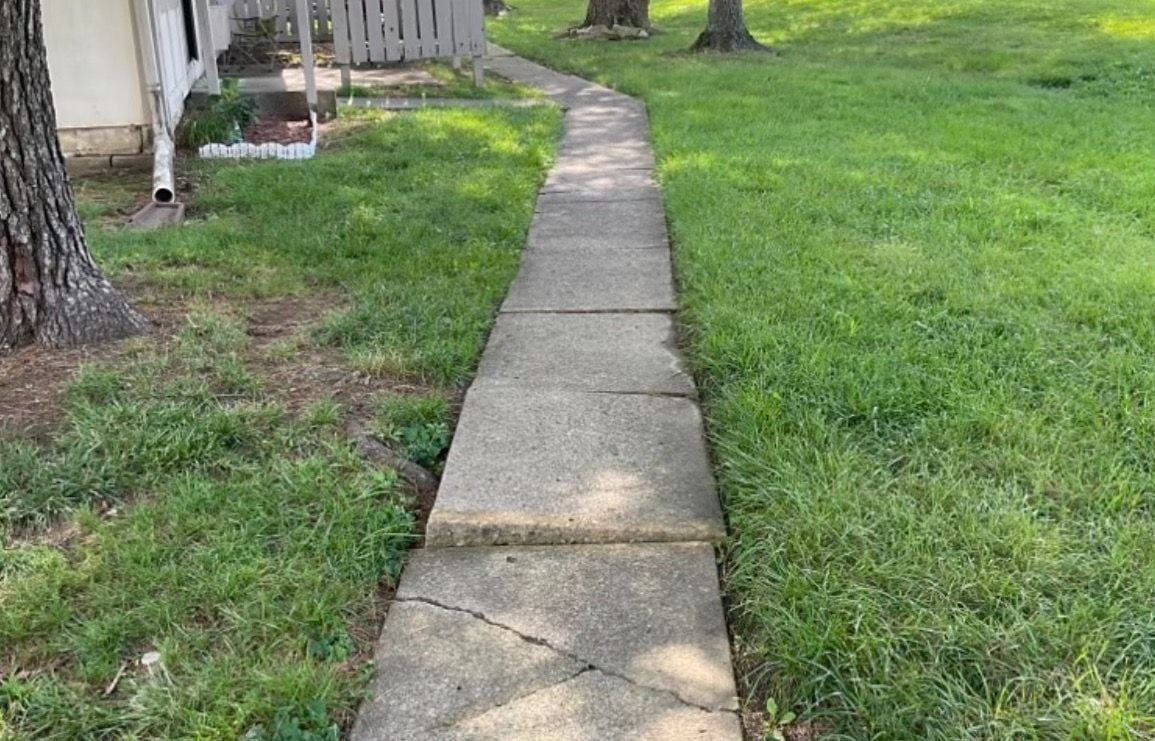
Concrete lifted out of place by tree roots? Professional concrete leveling services may be able to help even out the area.
Whether it’s a big, towering tree that’s been on your property for generations, or a young new sapling recently added to your landscaping, if placed next to your concrete, the tree roots could lift the concrete slabs and cause trip hazards to form.
If this has happened to you, you may be wondering about your options... Do I have to replace the concrete? Will I be able to save the tree?
There’s actually an easy way to eliminate trip hazards and make the concrete look better, without replacing the concrete or ripping out the tree: concrete leveling.
Concrete Leveling for Tree Roots
This process, called concrete leveling, works by lifting the surrounding slabs to become level with the raised portion. It can usually resolve tree root issues, depending on how severely they have lifted the concrete out of place
Over the last 30+ years here at A-1 Concrete Leveling, we’ve seen countless examples of how this process has restored the safety and functionality of concrete slabs lifted by tree roots, both in residential areas and commercial settings.
How Concrete Leveling Works Around Tree Roots
Concrete Leveling Basics
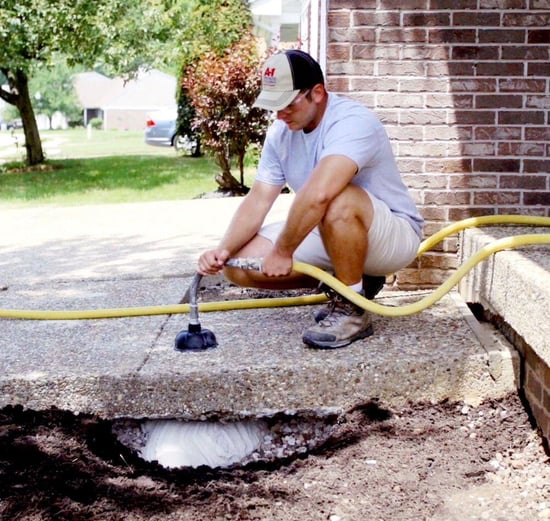
Concrete leveling in general works by drilling strategic holes in the sunken or settled concrete slabs. A leveling compound is injected through those holes where it spreads out below the surface of the concrete.
The leveling compound applies enough pressure to the bottom of the slab to raise it up from below. Once the settled slabs are back in the correct position, the drill holes are patched and the area is cleaned off, leaving you with stable and even concrete.
Related Resource: A-1's Concrete Leveling Process
Concrete Leveling + Tree Roots
Because tree roots typically raise concrete instead of making it sink or settle, the adjoining concrete slabs are lifted to align with the slab pushed out of place by the tree roots, instead of lowering the sections that were lifted by the tree.
The goal of concrete leveling with tree roots is to get the slope around the lifted slab as even as possible while keeping in mind that there will likely be a hump where the slab is raised by the tree roots.
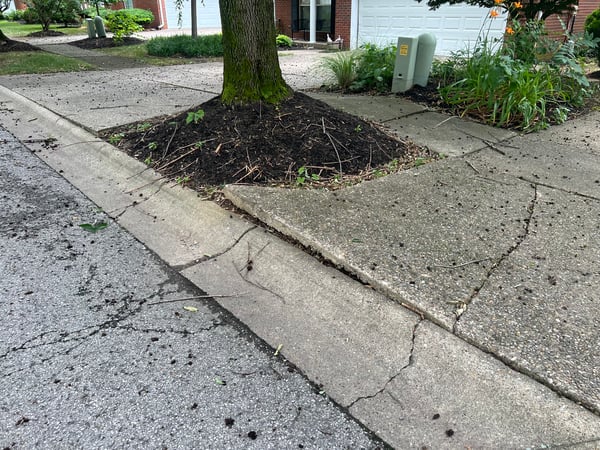
Sidewalk Lifted by Tree Roots vs. Other Concrete Areas
Sidewalks
Concrete leveling for concrete lifted by tree roots is typically most successful with sidewalk panels, because as long as the trip hazard is solved and the area looks better aesthetically, the slope does not have to be perfect for water runoff.
The use case for sidewalks is simply walking, and there’s typically not enough space on the sidewalk for water to puddle, so lifting the surrounding slabs to meet the lifted area with a hump or more dramatic slope is okay.
Driveways, Patios, and Other Areas
Areas like driveways or patios have different use cases, however. For example, you likely wouldn’t want a hump on your patio, but instead, a flat surface where you can put your furniture.
Driveways, patios, porches, and other concrete areas need to have an even slope based on their use cases, which means they are less likely to be a good fit for concrete leveling for tree roots.
When Is Concrete Too Far Lifted by Tree Roots for Concrete Leveling?
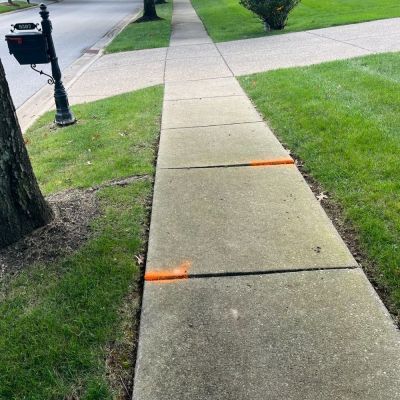
Good Fit for Concrete Leveling Repair
Below are two examples of when concrete lifted by tree roots can be resolved with concrete leveling services.
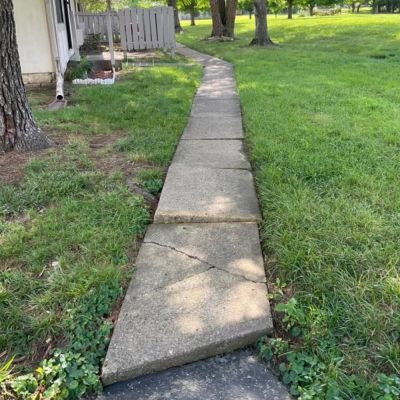
Bad Fit for Concrete Leveling
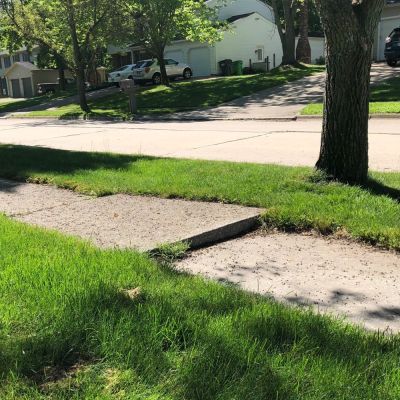
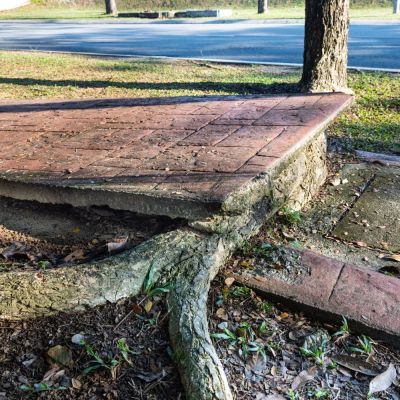
Below are two examples of when the tree roots have lifted the concrete too far out of place to be fixed with concrete leveling.
Pro Tip: Attaching photos to the online estimate request form is the best way to quickly determine whether or not your concrete is a good fit for concrete leveling when dealing with tree roots.
Should You Replace or Level Concrete Lifted by Tree Roots?
When deciding what to do about concrete lifted by tree roots, replacing it may cross your mind as an option. In some cases, concrete leveling can’t recover severely lifted concrete, so concrete replacement is the only option.
Consider this before deciding to move forward with concrete replacement:
-
Replacement is usually a long and messy process
-
Demolition and heavy equipment could damage the tree and the surrounding landscaping
- New concrete could resettle where the tree root has been removed
Related Resource: Potential Risks When Replacing Concrete
Additional Considerations for Concrete Leveling Near Tree Roots
Will the Roots Keep Growing?
It’s possible that the tree roots may keep growing and pushing the concrete up if you don’t take care of them first. You can help prevent them from continuing to cause problems by installing tree root barriers or cutting back the roots.
However, even if the tree roots do keep growing, the area can likely still be leveled again for a fraction of the cost of replacement.
How Is the Area Being Used?
You have to keep in mind the use case of the area in need of leveling. If it’s important that the concrete is completely flat, like a patio with patio furniture on top, leveling concrete lifted by tree roots will not be a good fit.
Every situation with tree roots and concrete leveling is unique, so we highly recommend sending in photos with your estimate request form so we can give you an idea of whether or not your concrete would be a good fit for leveling.
Fix Concrete Slabs Lifted by Tree Roots
Concrete leveling is a versatile concrete repair method that can resolve lots of problems, including in cases where concrete is being lifted out of place by tree roots.
The best way to see if your concrete issue involving tree roots can be repaired with concrete leveling is to request a free estimate with an A-1 expert.
Pro Tip: When requesting the estimate, be sure to include photos of the affected area so we can let you know whether or not we think concrete leveling could be a good fit for your unique situation.
Request a Free Estimate
Find out how much safe, beautiful concrete will cost you with a free onsite estimate from an A-1 franchise near you.

Topics:
