



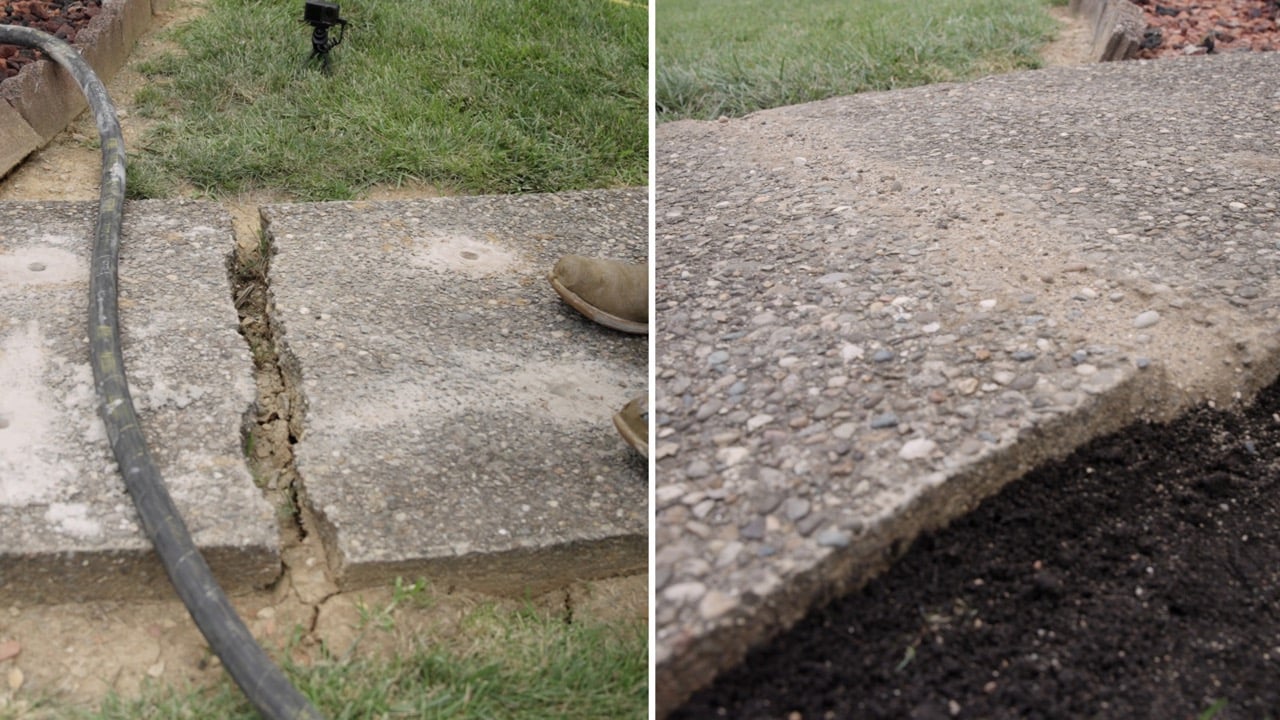
See how an A-1 crew lifted a sunken step and closed a 4-inch sidewalk gap without replacement.

Large gaps in sidewalks and sunken concrete steps can create serious trip hazards – often leaving homeowners wondering whether their only option is to tear out and replace it altogether.
In this episode of America Lifted, Bert and the A-1 Concrete Leveling Louisville crew tackled one of the largest sidewalk gaps they’ve ever encountered, plus a sunken porch step. Additionally, factors like a thick layer of overlayment atop the step and the need for horizontal movement complicated the repair. But the crew used ControlLevel™ alongside multiple tools and techniques to lift, stabilize, and protect the walkway without replacing it.
In This Article
The Problem: A Sunken Step and an Unexpected Complication
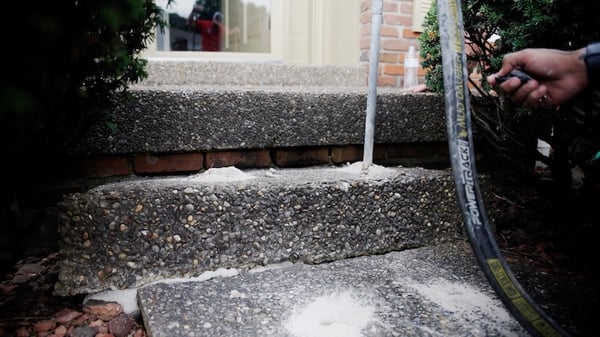
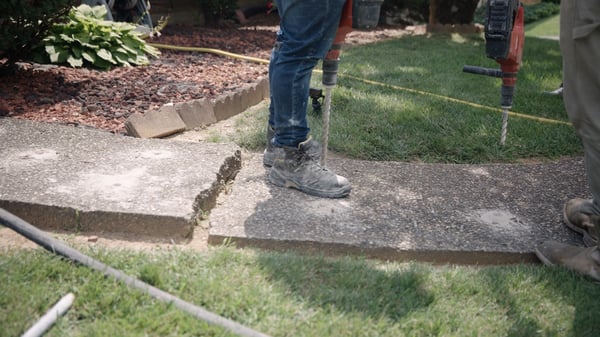
Over time, this Louisville homeowner’s sidewalk and front step had settled significantly. As the concrete sank, the step tilted backward toward the porch and created a large, uneven gap in the middle of the sidewalk.
To make the situation more complicated, another contractor doing work at the house had previously poured a layer of concrete (known as an “overlay” or “cap”) on top of the step for free without the homeowner’s knowledge.
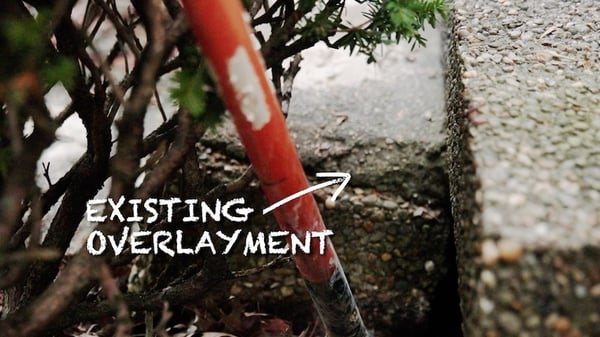
The overlay may have been intended to make the settled step appear more level, but it did not correct the underlying problem. Concrete overlays are generally not a permanent solution for settlement because they can chip, crack, or separate from the original slab over time.
Removing the overlay was not a simple option, either. Chipping it away could have damaged the original concrete underneath and left behind an uneven, pitted surface.
This meant the A-1 crew needed to work with both the original settlement and the unconventional repair that had already been added.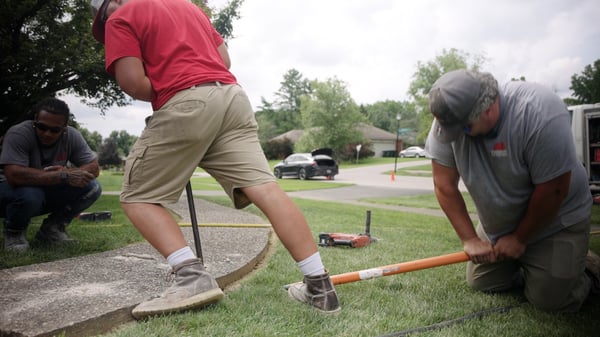
The Solution: Lifting, Guiding, and Stabilizing the Concrete Step
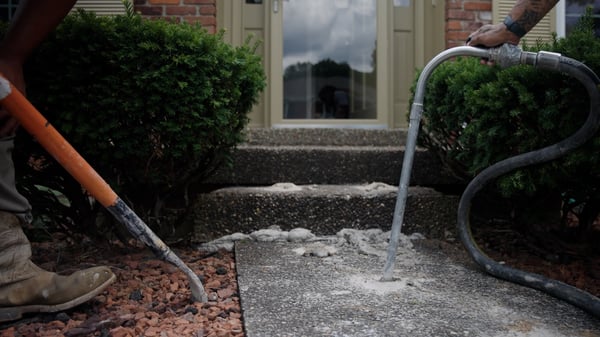
Rather than tearing out and replacing the sidewalk, the crew used A-1’s proprietary ControlLevel™ process to lift the settled concrete back toward its original position.
ControlLevel allows technicians to adjust the thickness and flow rate of the limestone-based leveling material as they work. In this case, the crew began with a thinner mixture before switching to a thicker material that could lift the sunken step more effectively.
Rotating the Step Into Place
Because the step was a small, disconnected piece of concrete, it did not respond to the lifting material in the same way a larger slab might. As material was pumped beneath it, the step wanted to move independently instead of rotating evenly into position.
The technicians used pry bars to help guide the step while continuing the controlled lift. Although pumping alone may have eventually moved it, the additional tools helped the crew better manage its direction and rotation.
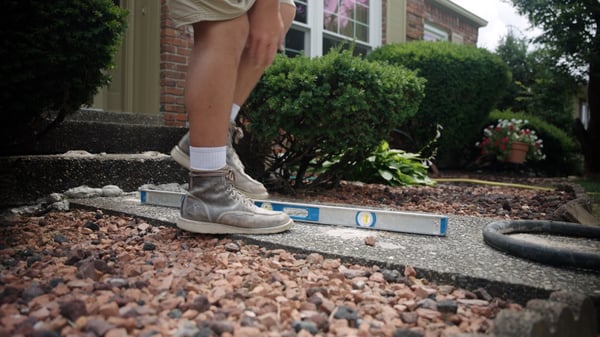
As the step moved, the uneven concrete overlay became more noticeable. The middle of the capped surface made contact before the two sides, preventing the step from rotating completely into a uniform position. Continuing to force the lift could have created new problems, so the crew stopped once the step had reached its safest practical position with adequate slope away from the home.
Finishing Touches
The crew then completed several additional steps to stabilize and protect the repair:
-
They installed two T-posts, one on each side of the sidewalk leading up to the step, to help prevent it from sliding out of position.
-
They filled the newly created void beneath the lifted concrete to provide more complete support and reduce the risk of future settlement.
-
They patched the leveling holes with backer rod and non-shrink grout.
Pro Tip: While the slurry pumped below the surface is used for vertical movements, T-posts are used to limit horizontal movements.
Filling One of the Largest Sidewalk Gaps A-1 Louisville Has Seen
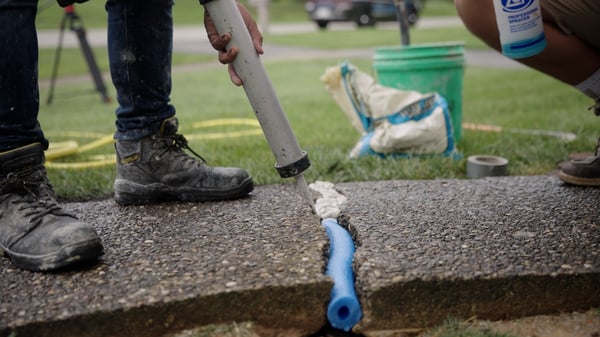
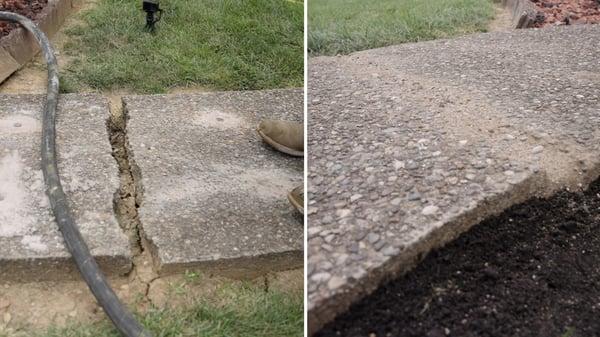
The A-1 Louisville crew also had to face another big challenge: a 4-inch crack in the walkway leading up to the lifted step. They filled the sidewalk’s unusually large gap with flexible polyurethane concrete caulk.
Because the gap was so wide, the crew first filled some of the open space with foam material. In this case, they used an unexpected tool in their toolbelt: a pool noodle. This reduced the amount of caulk needed and helped keep adhesion on both sides of the crack, allowing it to expand and contract properly with the concrete.
Finally, the crew added large gravel, small gravel, and sand to the surface of the caulk to help the repair blend more naturally with the surrounding sidewalk.
The Result: A Safer Sidewalk Without Full Replacement
The crew lifted the sunken step approximately 3 inches and repaired the nearly 4-inch-wide sidewalk gap, bringing the concrete into a safer, more even position without replacing a single slab. They also installed stabilizing T-posts and filled the void beneath the lifted concrete to provide continued support.
The previously installed overlay prevented the step from rotating completely into a uniform position. However, trying to force it farther, or removing the overlay, could have damaged the original concrete.
By combining controlled pumping, manual guidance, void filling, stabilization, and flexible caulking, the A-1 crew preserved the existing concrete and achieved the best practical result without tearing out and replacing the sidewalk or step.
Learn About Your Sidewalk Repair Options
If you’re dealing with uneven concrete or big cracks, replacement may not be your only option. Concrete leveling and caulking can help restore sunken or uneven sidewalks while preserving the concrete you already have.
Explore Concrete Academy for more information to help you understand your options. Or, request a free estimate from an A-1 Concrete Leveling location near you to find out whether your concrete can be lifted and repaired.
Request a Free Estimate
Find out how much safe, beautiful concrete will cost you with a free onsite estimate from an A-1 franchise near you.

